
REVIEW · SCHINDLER'S FACTORY & WWII TOURS
Krakow Schindler’s Factory & Ghetto & Plaszow Camp Guided Tour
This is history you can walk. In this 5-hour small-group tour, I like how Schindler’s Enamel Factory connects the story of occupied Krakow to the ghetto and then to the Plaszow camp site.
What I like most is that you’re not just looking at plaques—you’re getting the timeline made clear as you move between places that each tell a different part of the same story. You also get a professional guide and an included entry ticket for the factory museum, which cuts down on hassle when you’re on a tight schedule.
One possible drawback: it’s a long, heavy day with a decent amount of walking, and some stops are brief (about 15 minutes each), so comfy shoes and a calm pace matter.
In This Review
- Key things to know before you go
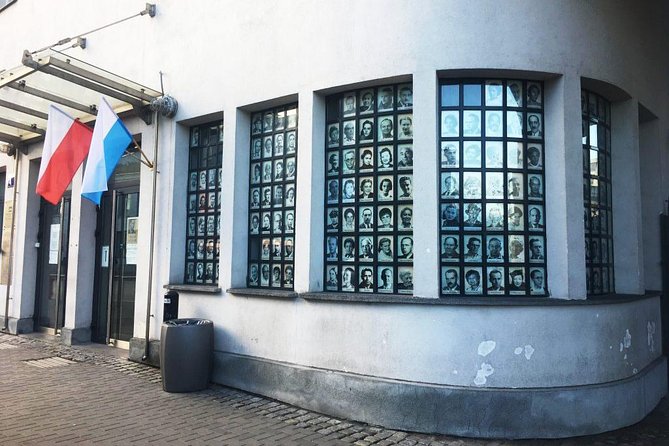
- Schindler’s Enamel Factory: Kraków under Nazi Occupation 1939–1945
- Ghetto Wall Fragment: a surviving 12-metre stretch of what remained
- Plac Bohaterow Getta: the cast-iron chair monument and what it symbolizes
- Plaszow camp site: from forced labor planning to a concentration camp
- How the 5-hour format works (and how to pace it)
- Price and value: what $76.35 buys you in Krakow
- Group size: small enough to feel personal, big enough to run smoothly
- Who this tour is best for in Krakow
- Things to know before you go
- Should you book this Schindler, ghetto, and Plaszow guided tour?
- FAQ
- How long is the Krakow Schindler’s Factory & Ghetto & Plaszow guided tour?
- What does the tour cost?
- What’s included in the price?
- Are tickets included for the ghetto wall fragment and Ghetto Heroes Square?
- Is admission included or free for the Plaszow camp site?
- Where do I meet, and where does the tour end?
- Do I need a tram ticket?
- How big is the group?
- Can I cancel for a full refund?
Key things to know before you go
- Schindler’s Factory isn’t a biography museum—the focus is Kraków under Nazi Occupation 1939–1945
- You get a museum ticket included for the factory, so you can spend your time inside
- You see an original ghetto wall fragment: a surviving 12-metre stretch with a memorial plaque
- Heroes Square has the cast-iron chair monument representing property and belongings left behind
- Plaszow is explained as it evolved from forced labor camp planning into a concentration camp
- Small-group style with a listed cap at 15, and an overall maximum of 25 travelers
Deeper into Kazimierz and its Jewish heritage
- Krakow: Schindler’s Factory & Ghetto Guided Tour
★ 4.7 · 1,694 reviews - Krakow: Jewish Quarter and Former Ghetto Tour
★ 4.9 · 1,441 reviews - Krakow: Bike Tour of Old Town, Jewish Quarter and the Ghetto
★ 4.9 · 1,155 reviews
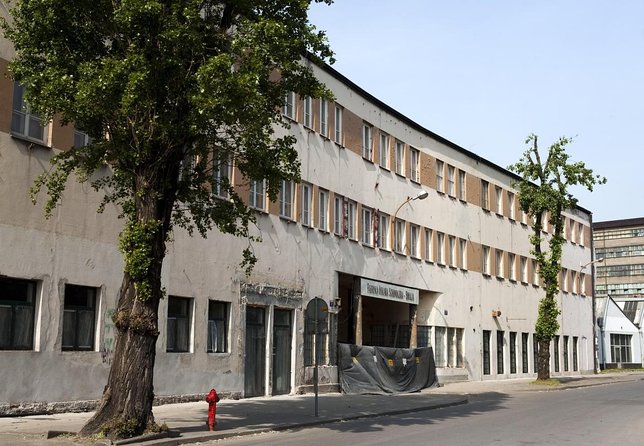
Schindler’s Enamel Factory: Kraków under Nazi Occupation 1939–1945
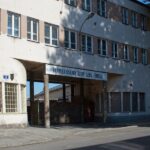
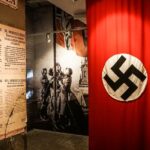
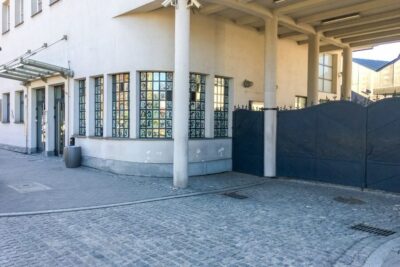
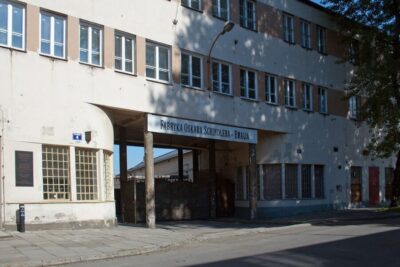
The tour starts at Lipowa 4 for a reason: Schindler’s Enamel Factory is one of Krakow’s most important museums, and it’s also one of the easiest places to get oriented. You’ll spend about 1 hour 30 minutes here, and your entry ticket is included.
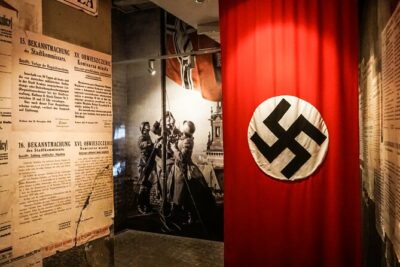
Here’s the first thing that helps you set expectations: this is not a Schindler biography stop. The main exhibition is about Kraków under Nazi Occupation 1939–1945, and it’s designed to show how daily life changed under Nazi control. That matters because it shifts the focus from a single person to the system—rules, restrictions, fear, and the way ordinary routines got crushed and reshaped.
As you walk through the museum, I like having a guide with you because they can connect what you see to the next stops outside. Without that glue, it’s easy to treat the museum as a stand-alone experience. With the guided format, you start building the bigger map in your head: occupied Krakow → ghetto life → transport and liquidation → labor and killing sites like Plaszow.
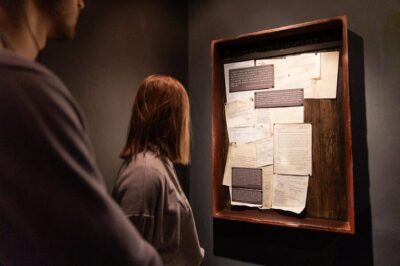
Practical tip: plan to take your time reading key labels even if you feel tempted to speed through. The museum is popular, and with only 90 minutes on the clock, you’ll get more out of it if you pick a few sections to focus on rather than trying to absorb everything at once.
Ghetto Wall Fragment: a surviving 12-metre stretch of what remained
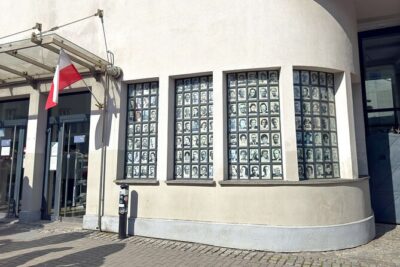
After the museum, the tour moves to a Ghetto Wall Fragment—a 12-metre stretch of original ghetto wall. This is one of those moments that can hit fast because it’s physical. You’re not guessing what a wall looked like. You’re standing at a real remnant.
You’ll have about 15 minutes at this stop. Admission is not included here, but the time is short enough that you’ll mainly be using the wall and the plaque to anchor the bigger story your guide is telling.
There’s a commemorative plaque raised in 1983 with text in Hebrew and Polish, explaining that people lived, suffered, and died here, and that this is where the final journey began. I find that phrasing important. It’s not vague history; it’s pointing to the connection between confinement and deportation. Your guide’s commentary helps you understand what you’re seeing: not a random wall, but a boundary tied to forced movement and extermination.
If you tend to be a slow reader, you may wish you had more time. That’s the trade-off of a schedule like this. Still, this stop works well because it’s one of the clearest “before you go any farther” reference points for the ghetto story.
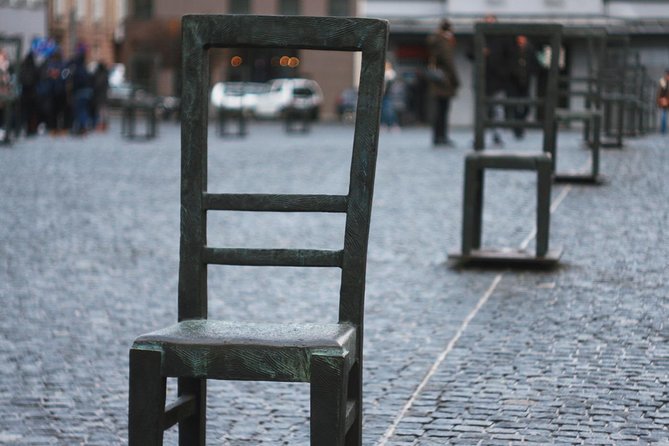
Plac Bohaterow Getta: the cast-iron chair monument and what it symbolizes
Next comes Plac Bohaterow Getta (Ghetto Heroes Square) in the Podgórze district. This area was inside the ghetto during 1941–1943, which your guide uses to connect the museum’s big picture to the lived space outside.
You get about 15 minutes here. Again, admission is not included for this stop, but it’s designed more for observation and reflection than ticketed entry.
The centerpiece is unusual: dozens of cast-iron chairs, each standing individually. They represent property and belongings of Krakow Jews scattered on the streets after the ghetto’s liquidation. Even if you’ve seen photos before, being there gives it a different weight. It’s not just an artifact. It’s a visual reminder of the moment when life was interrupted and possessions were stripped away.
A quick reality check: with only 15 minutes, you’ll likely move through the square while your guide frames what you should notice—where the monument sits in relation to the ghetto area, and why this kind of memorial exists. If you want to spend longer with it, do it after the tour ends by returning on your own, or use your 15 minutes to choose one thing to focus on: the chairs as symbols, the square’s layout, or the context your guide provides.
More of Krakow under the wartime occupation
- Krakow: Schindler’s Factory Ticket and Guided Tour Option★ 4.3 · 4,306 reviews
- Krakow: Schindler’s Factory Tour with Entrance Ticket★ 4.5 · 3,182 reviews
- Krakow: Schindler’s Factory Skip-the-Line Ticket★ 4.4 · 3,105 reviews
- Krakow: Schindler’s Factory Tour with Entrance Ticket★ 4.6 · 1,737 reviews
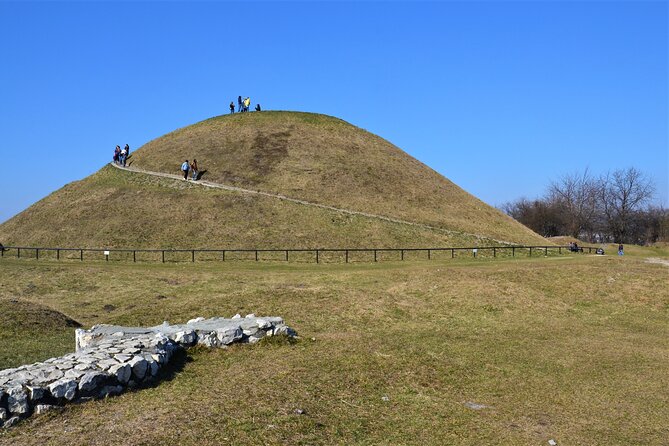
Plaszow camp site: from forced labor planning to a concentration camp
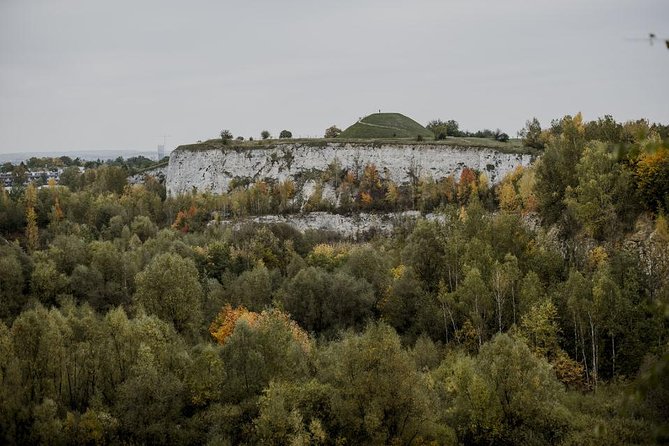
The last stop is Plaszow, the Nazi concentration camp site in the southern suburbs of Krakow. This part of the tour gets about 1 hour 30 minutes, and it’s where the day often feels most serious.
Plaszow started as a forced labor camp plan not long after the German invasion of Poland, and then it expanded and shifted into a concentration camp. The timeline your guide uses is key:
- Opened in 1940
- Expanded in 1941 and converted into a concentration camp
- From October 28, 1942, deportations from the Krakow ghetto began
- The camp was known for labor that supported military factories and a quarry
That last line matters because it shows how the Nazi system used prisoners for work that fed the war machine. It’s not just a story about internment; it’s also about exploitation—labor organized for profit and production, alongside the machinery of mass killing.
Admission here is listed as free, which is helpful because you’ll focus on the interpretation rather than paying for entry. What you’ll get, instead, is your guide’s pacing and explanation: how to read the space and understand what happened where.
One thing to plan for: camp sites are often open and uneven, so you’ll want shoes with good grip. Even with a relatively fixed route, you’ll walk on ground that doesn’t feel like a museum floor. You also may find your emotions spike as your guide connects deportation dates to the ghetto locations you’ve already seen.
How the 5-hour format works (and how to pace it)
This is listed at about 5 hours, which is a very specific kind of “all at once” history experience. The schedule is structured like this:
- Schindler’s Factory: 1 hour 30 minutes
- Ghetto wall fragment: 15 minutes
- Ghetto Heroes Square: 15 minutes
- Plaszow: 1 hour 30 minutes
That adds up quickly, and it means you can’t treat every stop like a separate half-day. Instead, the guide’s job is to connect the dots. If you go in expecting lots of free time, you might feel rushed.
From my perspective, this format is best if you’re okay with a guided rhythm: you listen, you look, you move on, and by the end the story feels more coherent than it would if you visited the sites one by one without context. The flip side is that the short stops can be intense—15 minutes in a memorial setting passes fast, and you may not catch every detail on your own.
Also, check your day plan. If you’re thinking about pairing multiple history tours, treat this as the heavy anchor. I’d rather you leave space before and after for quiet recovery, like a proper meal and time to sit down.
Price and value: what $76.35 buys you in Krakow
At $76.35 per person, this tour isn’t cheap in the sense of “souvenir price,” but it can be strong value when you compare what’s included and what isn’t.
What you get included:
- Professional guide
- Entrance ticket to the Schindler’s Factory Museum
What you should expect to pay separately or note:
- Tram ticket is not included (listed as 4 PLN)
- Ghetto wall fragment and Ghetto Heroes Square have “not included” admissions listed
- Plaszow is free
So you’re paying for guided interpretation plus the factory entry. That’s a pretty good deal for one day in Krakow if your goal is real understanding rather than a quick photo tour.
The other value piece is time. The tour is designed to avoid wasted waiting in lines at the museum stage by bundling the ticket. If you’ve ever tried to tackle popular Krakow museums while also handling your own transport, you’ll appreciate that built-in structure.
One more signal: the average booking time is 103 days in advance, which usually means demand is steady. If you’re traveling during peak season or on a weekend, booking earlier is smart.
Group size: small enough to feel personal, big enough to run smoothly
The description emphasizes a small-group feel, capped at 15 travelers. The operator info also lists a maximum of 25 travelers. In practice, it likely varies by date.
Either way, the structure matters: a small group keeps your guide’s explanations clear and helps you stay together. In memorial settings, that matters. It’s easier to hear details, and you can follow the route without constantly waiting for people to catch up.
If you’re traveling with friends, you’ll enjoy the calm vibe. If you’re traveling solo, you still get a guided flow without feeling like you’re in a crowd.
Who this tour is best for in Krakow
This works especially well if you:
- Want WWII context focused on Krakow, not just general Europe history
- Are visiting multiple Holocaust-related sites and want them connected in a clear timeline
- Have been to Auschwitz and want to understand what happened closer to Krakow, including deportations and labor systems
- Prefer guided interpretation over reading everything alone
It’s also a good choice if you like practical pacing: the tour keeps moving, and you still cover the big three areas—factory museum, ghetto memorial points, and Plaszow.
If you’re the type who needs long stretches of silent time at memorials, you might find the fixed stop durations a bit tight. But you can balance that by arriving with a plan for what you want to focus on at each stop, then returning afterward for a second look.
Things to know before you go
A few practical points will make the day smoother.
You’ll start at Lipowa 4, 32-051 Kraków and end at Henryka Kamieńskiego 57, 30-644 Kraków. The tour is noted as being near public transportation, which helps if you’re coming in from elsewhere in the city.
Bring comfortable walking shoes. This isn’t a sit-and-watch experience. Even though the tour is 5 hours, it’s built on moving between sites and spending focused time at each one.
Plan for transit costs: a tram ticket is not included and is listed as 4 PLN. If you rely on transit, buy that before you start so you’re not scrambling mid-day.
Should you book this Schindler, ghetto, and Plaszow guided tour?
I’d book it if you want a guided, connected story of occupied Krakow, with time built in to see the museum and key memorial sites without line delays. The included Schindler’s Factory ticket and the interpretation from a professional guide are the two big reasons it feels like good value for a single afternoon.
I might skip it—or consider pairing it differently—if you’re trying to keep your day very light, or if short stops feel frustrating for you. Memorial spaces deserve attention, and a 15-minute slot can feel brief if you’re the type who reads slowly.
Bottom line: if you’re in Krakow for a limited time and you want the sites to make sense together, this is a solid pick.
FAQ
How long is the Krakow Schindler’s Factory & Ghetto & Plaszow guided tour?
It runs for about 5 hours.
What does the tour cost?
The price is $76.35 per person.
What’s included in the price?
You get a professional guide and an entrance ticket to the Schindler’s Factory Museum.
Are tickets included for the ghetto wall fragment and Ghetto Heroes Square?
The admissions for those two stops are listed as not included.
Is admission included or free for the Plaszow camp site?
Admission to Plaszow is listed as free.
Where do I meet, and where does the tour end?
The meeting point is Lipowa 4, 32-051 Kraków. The tour ends at Henryka Kamieńskiego 57, 30-644 Kraków.
Do I need a tram ticket?
Yes. A tram ticket is not included, and it’s listed at 4 PLN.
How big is the group?
The experience lists a maximum of 25 travelers, and the small-group description mentions a cap of 15 travelers.
Can I cancel for a full refund?
Yes. You can cancel up to 24 hours in advance for a full refund.
More Tour Reviews in Krakow
Krakow in Wartime: More Reviews
More of Jewish Kazimierz

Just added: fresh Krakow reviews
Schindler's Factory & WWII Tours, compared.
 ★ 4.3Schindler’s Factory Ticket and Guided Tour OptionFrom $254,306 reviews
 ★ 4.5Schindler’s Factory Tour with Entrance TicketFrom $493,182 reviews
 ★ 4.4Schindler’s Factory Skip-the-Line TicketFrom $253,105 reviews
★ 4.6Schindler’s Factory Tour with Entrance TicketFrom $401,737 reviews
★ 4.4Schindler’s Factory Skip-the-Line TicketFrom $253,105 reviews
★ 4.6Schindler’s Factory Tour with Entrance TicketFrom $401,737 reviews
 ★ 4.5Schindler’s Factory in Krakow: Guided Tour & Skip the Line TicketFrom $351,714 reviews
 ★ 4.7Schindler’s Factory & Ghetto Guided TourFrom $571,694 reviews
 ★ 4.3Schindler’s Factory Ticket with Guided Tour OptionFrom $421,485 reviews
 ★ 4.0Krakow Schindler’s Factory Guided Tour with Admission TicketFrom $351,156 reviews
Browse the lists this tour appears in