
REVIEW · SCHINDLER'S FACTORY & WWII TOURS
Krakow: Schindler’s Factory & Ghetto & Plaszow Camp Guided Tour
Three sites, one hard story. This tour strings together Schindler’s Enamel Factory and key WWII locations around the Krakow Ghetto and Plaszow camp, with a local guide putting the pieces into order.
I especially like the way the Schindler stop teaches life under Nazi occupation (not just a quick name-and-date biography). I also like the fact that Plaszow is treated as a real place you walk through, including viewpoint time at Krakus Mound. The main consideration is that you’ll cover a lot of ground, and Plaszow can be hilly and muddy depending on weather.
With a max group size of 25 and professional guidance, it’s easier to ask questions and stay oriented. If you see guides like Dominika or Matthew listed, take that as a good sign—they’re referenced by name for clear, careful explanations.
In This Review
- Key highlights to look forward to
- Schindler’s Factory Museum: what makes this stop matter
- Fabryka Emalia Oskara Schindlera: your 90-minute museum plan
- The ghetto wall fragment: a short stop that hits hard
- Plac Bohaterow Getta and the 70 chairs: remembering through objects
- Plaszow Concentration Camp remains: quarry, hilly ground, and Krakus Mound views
- Schindler’s to Plaszow to the city again: making sense of the day
- Price and value: why this costs about $76.33
- Logistics that actually affect your comfort
- Choosing the guide: what Dominika and Matthew seem to do well
- Should you book this Schindler’s Factory, Ghetto, and Plaszow tour?
- FAQ
- Is Schindler’s Factory Museum admission included?
- What kind of museum is Schindler’s Factory during this tour?
- How long does the tour take?
- What are the main stops during the 5 hours?
- Is Plaszow admission included?
- Are tickets included for the ghetto wall fragment and Plac Bohaterow Getta?
- What is the group size?
- Where do we meet and where does the tour end?
- Do I need to bring my own public transport money?
- Is free cancellation available?
Key highlights to look forward to
- Schindler’s Factory Museum (included entry): See how occupied Krakow is presented through the Historical Museum setting.
- Ghetto Heroes Square: Those metal chairs in Plac Bohaterow Getta help you picture how lives were scattered after liquidation.
- A surviving ghetto wall fragment: A short walk past an original 12-meter stretch, marked with Hebrew and Polish text.
- Plaszow on foot: You’ll tour remains around Liban Quarry and climb up to Krakus Mound for views.
- Skip the long individual museum line: The tour route is designed to save you time at Schindler’s Factory.
Deeper into Kazimierz and its Jewish heritage
- Krakow: Schindler’s Factory & Ghetto Guided Tour
★ 4.7 · 1,694 reviews - Krakow: Jewish Quarter and Former Ghetto Tour
★ 4.9 · 1,441 reviews - Krakow: Bike Tour of Old Town, Jewish Quarter and the Ghetto
★ 4.9 · 1,155 reviews
Schindler’s Factory Museum: what makes this stop matter
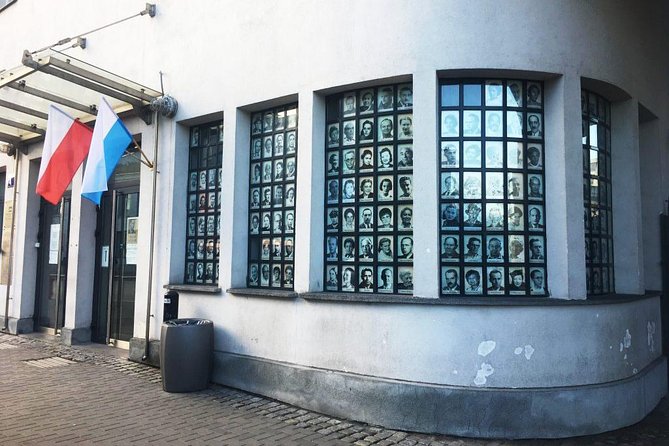
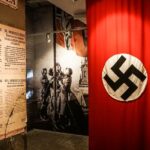
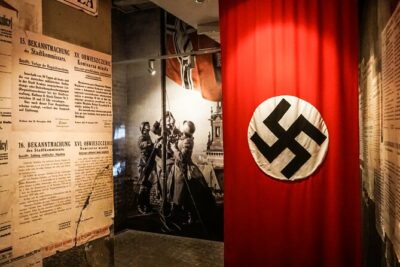
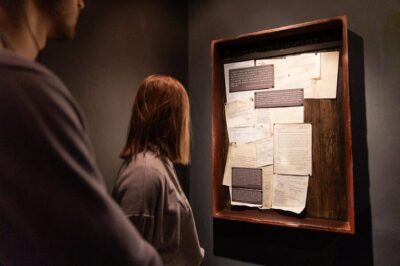
Most Krakow WWII tours treat Schindler’s name like a shortcut. Here, the emphasis is different: the museum visit is framed around Kraków under Nazi Occupation 1939–1945, so you’re not only learning who Schindler was—you’re learning what occupation meant for ordinary people.
That distinction is important for your brain. You get a bigger picture first, then you can fit the later ghetto and camp pieces into place. And yes, it’s also a great “reset” stop because it’s inside, with proper museum pacing.
Also, you’ll appreciate that the tour includes the entrance ticket to Schindler’s Factory Museum. That removes a common headache of museum logistics when the day is already heavy and time feels tight.
Fabryka Emalia Oskara Schindlera: your 90-minute museum plan
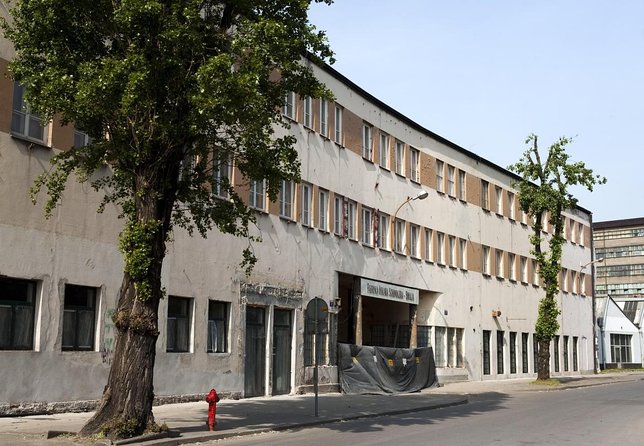
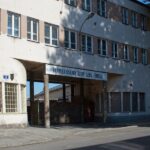
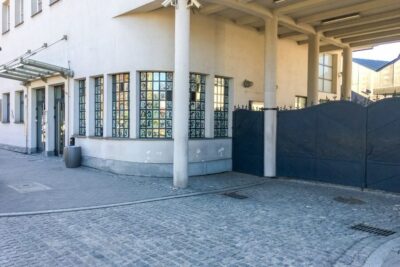
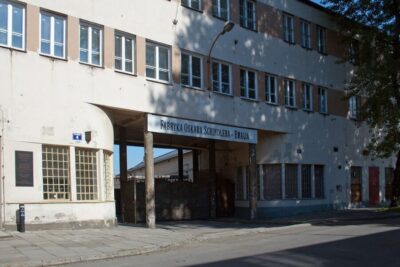
You start at Lipowa 4 at Fabryka Emalia Oskara Schindlera. Expect about 1 hour 30 minutes inside the museum.
A key detail: this is not a strictly biographical museum. The main exhibition is focused on the occupied city, showing multiple sides of daily life under Nazi rule. That can be more useful than you’d expect because it gives you context for why the ghetto system and forced labor later became so brutal and efficient.
What you should do during the visit
- Pace yourself. You’re not sprinting through rooms.
- Look for how the exhibits explain mechanisms of control, not just tragedy.
- Use the guide as a translator for what you’re seeing, especially for names, terms, and dates that might feel abstract without context.
Possible drawback: if you’re hoping for a purely Schindler-centered walkthrough, you may find the museum’s focus broader than expected. The upside is that the later outdoor stops will land with more meaning.
The ghetto wall fragment: a short stop that hits hard
After the museum, the tour moves you toward a surviving piece of the ghetto wall—a 12-meter stretch of original structure. This segment is brief (about 15 minutes) but it’s designed to do a lot in a little time.
You’ll see a commemorative plaque raised in 1983, with text in Hebrew and Polish. It’s the kind of marker that helps you slow down. A wall fragment isn’t a whole story, but it makes the idea of confinement painfully physical.
Good to know: there’s no admission ticket included for this stop, so don’t assume every checkpoint is fully covered the same way as Schindler’s Factory.
How to get the most from this 15 minutes
- Stand still for a minute. Let the scale and placement sink in.
- Pay attention to where the plaque is positioned; it’s meant to anchor the place in memory.
- Treat it like an orientation point, not a full museum experience.
More of Krakow under the wartime occupation
- Krakow: Schindler’s Factory Ticket and Guided Tour Option★ 4.3 · 4,306 reviews
- Krakow: Schindler’s Factory Tour with Entrance Ticket★ 4.5 · 3,182 reviews
- Krakow: Schindler’s Factory Skip-the-Line Ticket★ 4.4 · 3,105 reviews
- Krakow: Schindler’s Factory Tour with Entrance Ticket★ 4.6 · 1,737 reviews
Plac Bohaterow Getta and the 70 chairs: remembering through objects
Next comes Plac Bohaterow Getta in the Podgórze district. In 1941–1943, this area was within the ghetto, and it served as a concentration point for the Jewish population before deportations.
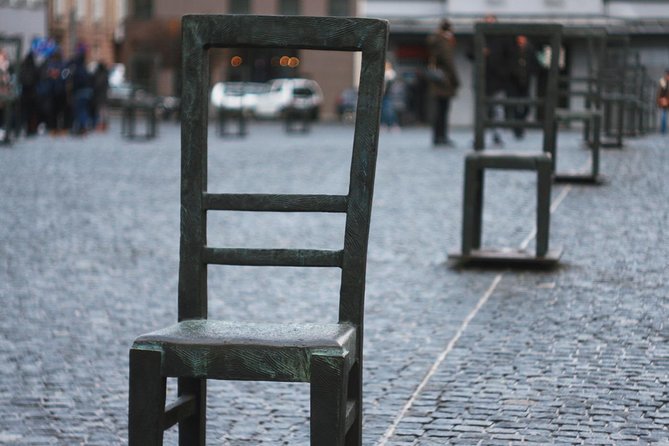
Today, the landmark is unusual: several dozen cast-iron chairs spread across the square. They symbolize property and belongings of Krakow Jews left behind or scattered after the ghetto was liquidated.
This stop also lasts about 15 minutes, and like the wall fragment, it notes that admission isn’t included. Practically, that usually means you should be ready for the possibility of small on-the-spot costs or free access depending on current local arrangements—but don’t plan your budget as if it’s guaranteed included.
Why the chairs are a strong teaching tool
You’ll probably notice how quickly your mind turns them into homes and routines. A chair is everyday. Then the guide’s explanation forces the contrast: everyday objects, stripped of their owners, becoming evidence of forced displacement.
Plaszow Concentration Camp remains: quarry, hilly ground, and Krakus Mound views
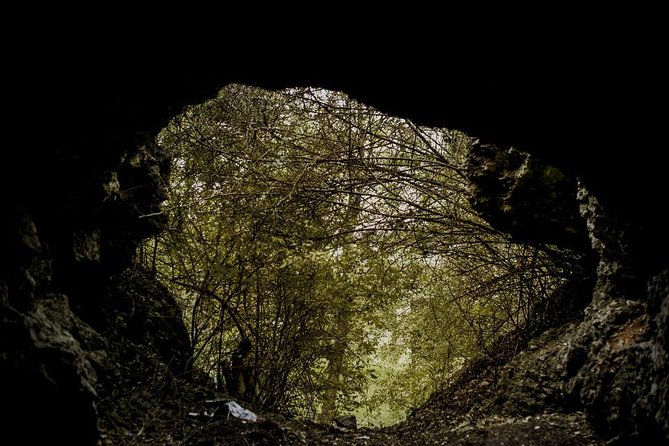
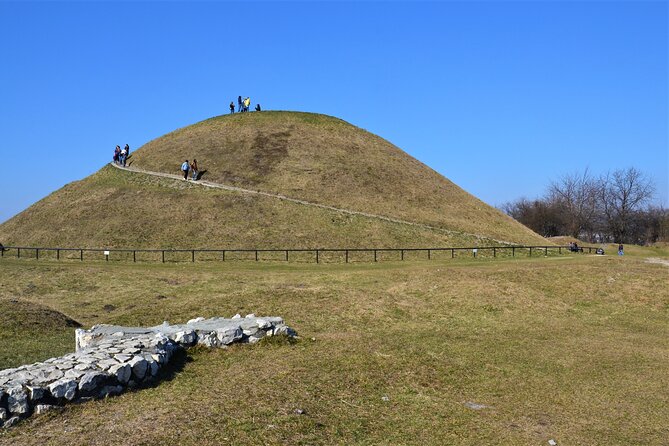
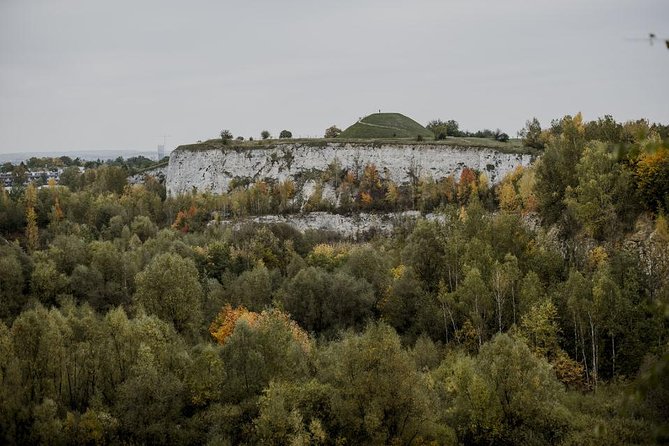
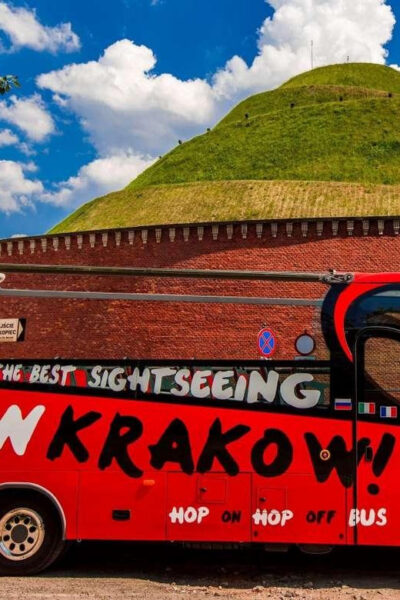
Plaszow is the outdoor part where the tour feels most physically real. The stop is about 1 hour 30 minutes, and it’s tied to several key elements: Plaszow’s role as a Nazi forced labor and later concentration camp, the Liban Quarry area, and a climb up to Krakus Mound for panoramic views.
Here’s the basic frame you should carry with you. Plaszow opened in 1940 as a forced labor camp plan, then expanded in 1941 and operated as a concentration camp. From October 28, 1942, deportations of Jews from the Krakow ghetto began. The camp’s labor supported military-related factories and quarry work, which is why Liban Quarry is not just a scenic add-on—it’s part of how the system functioned.
The tour notes that admission for this portion is free, which helps keep the day from turning into a ticket-hunting exercise.
What to expect on the ground
Plaszow is uneven, with hills. Even when parts feel open, you’re walking through preserved and remembered areas where not much remains in the obvious way you might expect. That can feel surreal: the site isn’t polished or dramatic like some curated memorial spaces elsewhere.
Don’t ignore shoe advice. Wear comfortable shoes. One practical tip from real-world experience: it can be hilly and muddy in places, so traction matters more than style.
Krakus Mound is more than a view
The climb can help you understand geography. From up there, you can connect what you’ve been hearing about the camp’s location and surroundings. Views won’t soften what happened, but they can make the place easier to grasp and remember.
Schindler’s to Plaszow to the city again: making sense of the day
This tour is about links, not just stops. When you move from Schindler’s Factory (occupied city context) to the ghetto wall and chairs (local signs of confinement and liquidation), you’re building a timeline with your feet.
Timing matters here. With a total duration of about 5 hours, you’re moving at a steady pace. That’s one reason the group stays relatively small (max 25 travelers): it keeps the flow manageable and helps the guide control questions and timing without letting you get lost in the shuffle.
Your best strategy for the day
- Keep water handy and pace yourself at Plaszow.
- If the history is emotionally intense, take short breaks when you can—just step aside for a minute near walls, plaques, or open areas.
- Use the guide as your “translator.” If you don’t understand a term or timeline moment, asking right then beats trying to fix it later.
Price and value: why this costs about $76.33
At about $76.33 per person for a 5-hour guided experience, this isn’t the cheapest option in Krakow. But value here comes from three places that add up:
First, Schindler’s Factory Museum entrance is included. Museum tickets can quietly change the cost of a self-guided plan.
Second, you get a guided narrative that connects the ghetto and Plaszow locations into a single, coherent story. You can read about these places, but a guide helps you interpret what you see on the ground and what to pay attention to.
Third, the tour is set up to skip the long line for individual visitors at Schindler’s Factory. That can matter a lot when you’re on a timed city break.
What you might still pay separately
The tour notes that admission tickets are not included for the ghetto wall fragment and Plac Bohaterow Getta, and public transport costs (like a tram ticket) are not included. So the real total can vary depending on what’s required on the day at each stop.
Logistics that actually affect your comfort
You meet at Lipowa 4, 32-051 Kraków and the tour ends at Henryka Kamieńskiego 57, 30-644 Kraków.
The tour is described as near public transportation, so you won’t need a car. Still, you’ll want to plan your day so you’re not rushing afterward. This kind of route doesn’t end cleanly like a standard sightseeing loop.
Weather matters. One review highlighted how inclement weather didn’t stop the guide from making the tour meaningful. Still, rain can change how hard Plaszow feels, especially on muddy or uneven areas.
If you’re choosing what to pack: think walking first. Comfortable shoes are a must. A light layer helps for indoor-outdoor transitions.
Choosing the guide: what Dominika and Matthew seem to do well
Guide quality is usually the difference between a history lecture and a real understanding. In this case, names like Dominika and Matthew come up for a reason.
Dominika is described as friendly and highly effective with clear explanations, including how the ghetto and Plaszow system worked and what humiliation and destruction looked like in real terms. Matthew is described as doing his best to present both WWII history and the present-day local community context.
How to use that info without overthinking it
- If you can select a guide option, prioritize whoever is listed with strong communication in English and a steady pacing style.
- On the day, don’t be shy about asking follow-up questions. A good guide will adjust and explain the next layer without making you feel rushed.
Should you book this Schindler’s Factory, Ghetto, and Plaszow tour?
I’d book it if you want a Krakow WWII route that goes beyond the headline sites. This tour focuses on places many people miss: the ghetto wall fragment, Plac Bohaterow Getta chairs, and Plaszow remains—plus the Schindler museum context that helps you connect the dots.
I’d think twice if you’re hoping for a mostly comfortable, low-effort walking day. Expect lots of walking, and Plaszow can be rough underfoot. Also, if you want a museum that’s purely about Schindler the man, the museum’s occupation-focused format might not be what you expected.
If you like your history grounded in physical places (and you don’t mind that it’s heavy), this is a strong choice for a one-day, guided experience that’s both practical and deeply memorable.
FAQ
Is Schindler’s Factory Museum admission included?
Yes. The tour includes the entrance ticket to Schindler’s Factory Museum.
What kind of museum is Schindler’s Factory during this tour?
The museum is not strictly biographical. The main exhibition focuses on Kraków under Nazi Occupation 1939–1945.
How long does the tour take?
The tour duration is about 5 hours.
What are the main stops during the 5 hours?
You’ll visit Schindler’s Enamel Factory, a ghetto wall fragment, Plac Bohaterow Getta, and the Plaszow concentration camp area, with additional viewing time included such as Liban Quarry and the climb to Krakus Mound.
Is Plaszow admission included?
Yes. The Plaszow camp portion notes admission is free.
Are tickets included for the ghetto wall fragment and Plac Bohaterow Getta?
No. The tour data says tickets are not included for the ghetto wall fragment and for Plac Bohaterow Getta.
What is the group size?
The tour has a maximum of 25 travelers.
Where do we meet and where does the tour end?
The start meeting point is Lipowa 4, 32-051 Kraków, Poland. The tour ends at Henryka Kamieńskiego 57, 30-644 Kraków, Poland.
Do I need to bring my own public transport money?
Public transportation is not included, so you may want to budget for something like a tram ticket.
Is free cancellation available?
Yes. You can cancel for a full refund up to 24 hours in advance. After that, the amount paid is not refunded.
More Tour Reviews in Krakow
Krakow in Wartime: More Reviews
More of Jewish Kazimierz

Just added: fresh Krakow reviews
Schindler's Factory & WWII Tours, compared.
 ★ 4.3Schindler’s Factory Ticket and Guided Tour OptionFrom $254,306 reviews
 ★ 4.5Schindler’s Factory Tour with Entrance TicketFrom $493,182 reviews
 ★ 4.4Schindler’s Factory Skip-the-Line TicketFrom $253,105 reviews
★ 4.6Schindler’s Factory Tour with Entrance TicketFrom $401,737 reviews
★ 4.4Schindler’s Factory Skip-the-Line TicketFrom $253,105 reviews
★ 4.6Schindler’s Factory Tour with Entrance TicketFrom $401,737 reviews
 ★ 4.5Schindler’s Factory in Krakow: Guided Tour & Skip the Line TicketFrom $351,714 reviews
 ★ 4.7Schindler’s Factory & Ghetto Guided TourFrom $571,694 reviews
 ★ 4.3Schindler’s Factory Ticket with Guided Tour OptionFrom $421,485 reviews
 ★ 4.0Krakow Schindler’s Factory Guided Tour with Admission TicketFrom $351,156 reviews
Browse the lists this tour appears in