
REVIEW · SCHINDLER'S FACTORY & WWII TOURS
Schindler’s Factory and Jewish Ghetto Guided Tour
Kraków becomes personal on this guided walk. You get two stand-out experiences in one go: the Schindler’s Factory Museum exhibition makes Nazi-occupied daily life feel real, and the ghetto route hits the places tied to confinement and round-ups, including preserved wall fragments. The Under the Eagle Pharmacy stop adds a powerful theme of help and risk, but the pace can feel a bit fast in the factory section if you like to linger over every display.
I also like how the guides anchor the story in people, not just dates. In past groups, I’ve seen names like Bartholomew and Joanna praised for clear English and strong context, and Alicja singled out for bringing difficult history to life without turning it into a spectacle. You’ll be in a small group (up to 25), and the museum’s layout includes narrow passageways, so comfort and time management matter.
At $57 for 3 hours, this isn’t an impulse buy, but it’s also not just a ticket plus a leaflet. You’re paying for a licensed guide, fast-track entry, and a guided walking district that helps you connect what you saw indoors with what you’ll see outside. If you want a totally self-paced museum day, you might prefer buying museum tickets and walking on your own afterward instead.
In This Review
- Key highlights to look for
- Schindler’s Factory Museum: where the story becomes concrete
- How the guide builds context before you hit the ghetto streets
- Józefińska 41: lifelines inside the enclosure
- Ghetto Heroes Square and the Chair Memorial: round-ups made visible
- Under the Eagle Pharmacy: help under risk (no entry inside)
- Price and time: is $57 good value for this 3-hour tour?
- What the best guides do (and how to choose your moment)
- Who this tour suits best in Kraków
- Tips to get more from the 3-hour route
- Should you book this tour?
- FAQ
- How long is the Schindler’s Factory and Jewish Ghetto guided tour?
- What’s included in the price?
- Does the tour include food or drinks?
- Where do I meet my guide?
- Is the Under the Eagle Pharmacy stop inside the building?
- What languages are available?
Key highlights to look for
- Factory museum context first: you walk in with the wartime background before the ghetto streets start making emotional sense
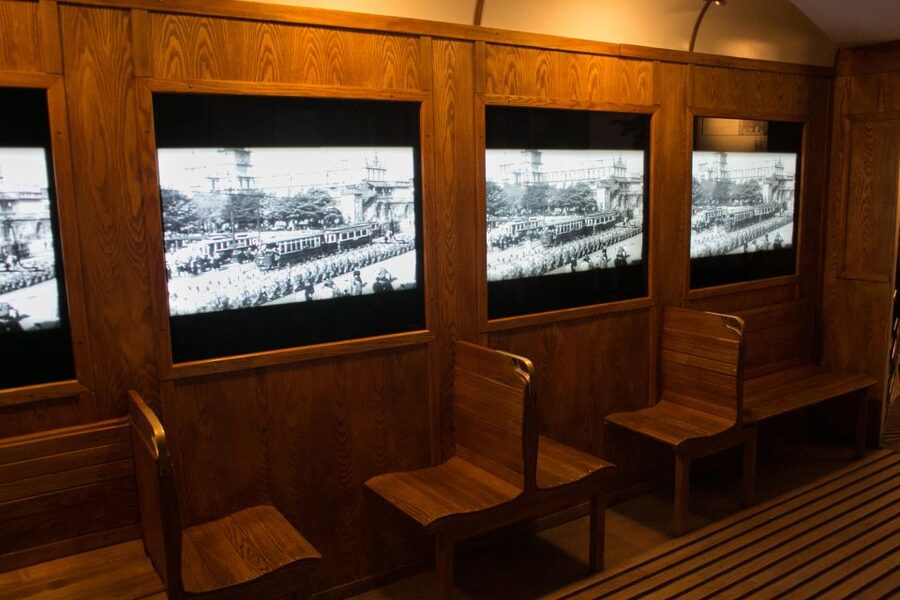
- Real artifacts plus reconstructions: original items and wartime-style street scenes show what life looked and felt like
- Preserved ghetto wall remnants: physical boundaries make the “enclosure” idea hit harder than maps ever do
- Józefińska 41 stop: you learn how orphanage, welfare offices, and a hospital functioned as lifelines
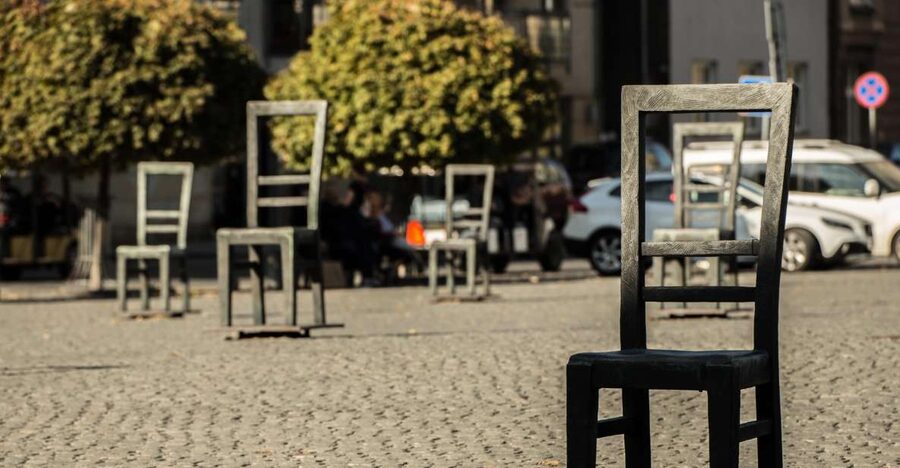
- Ghetto Heroes Square + Chair Memorial: the open space ties directly to round-ups and deportations
- Under the Eagle Pharmacy stories: you hear about Tadeusz Pankiewicz and staff (no entry, but the meaning lands)
Deeper into Kazimierz and its Jewish heritage
- Krakow: Schindler’s Factory & Ghetto Guided Tour
★ 4.7 · 1,694 reviews - Krakow: Jewish Quarter and Former Ghetto Tour
★ 4.9 · 1,441 reviews - Krakow: Bike Tour of Old Town, Jewish Quarter and the Ghetto
★ 4.9 · 1,155 reviews
Schindler’s Factory Museum: where the story becomes concrete
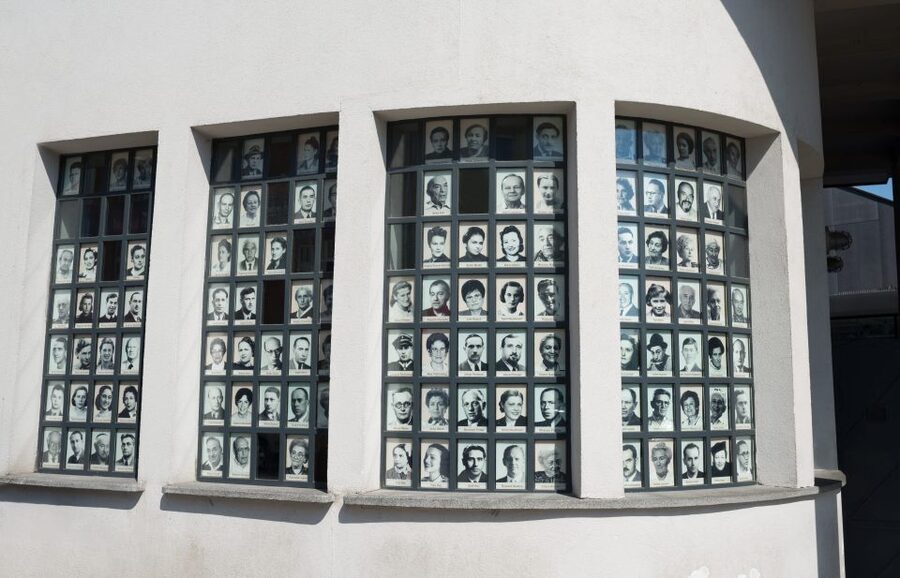
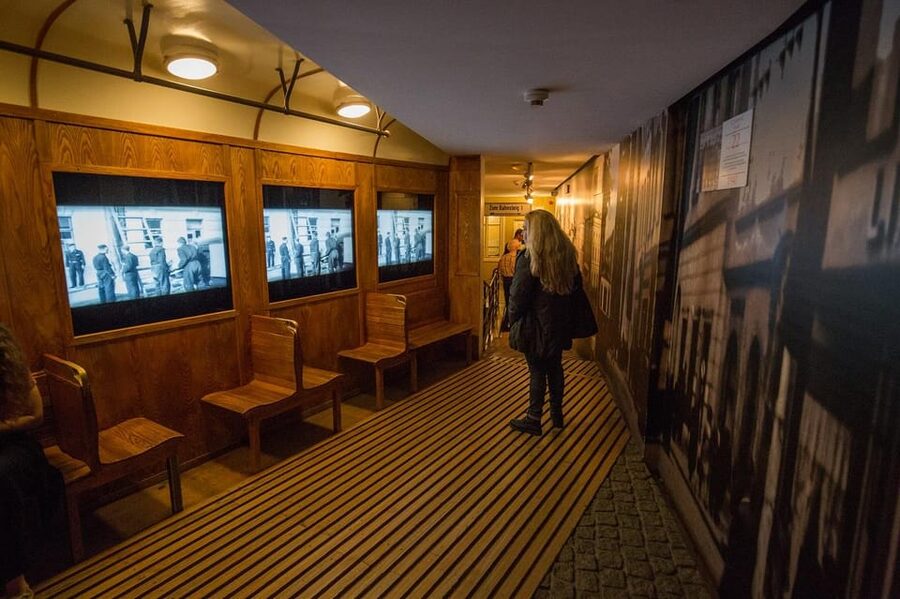
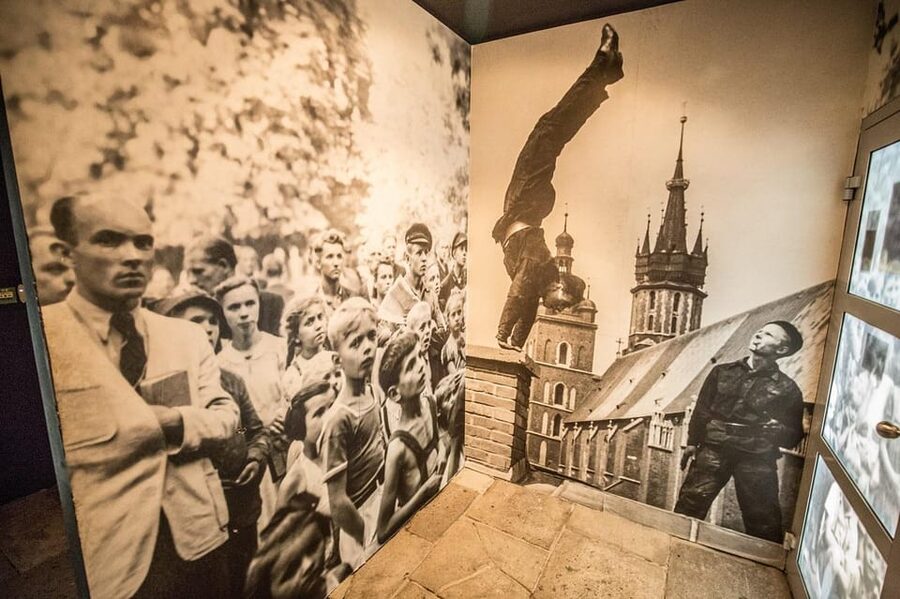
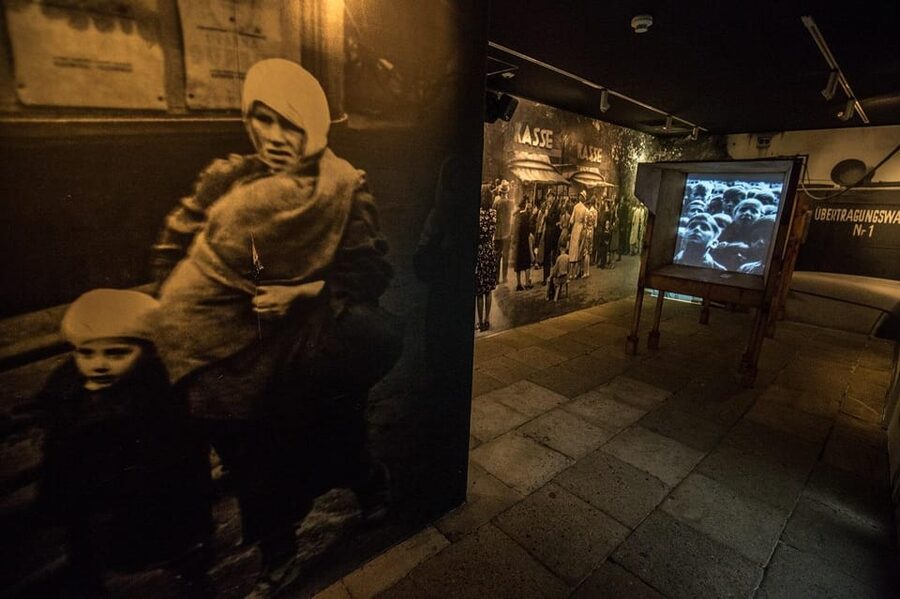
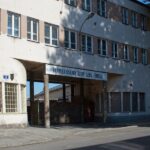
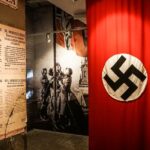
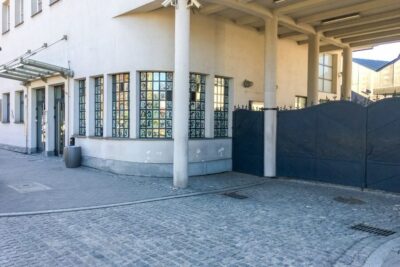
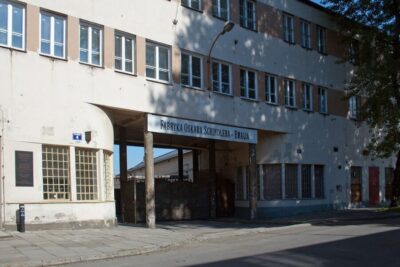
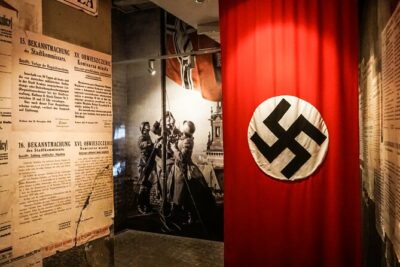
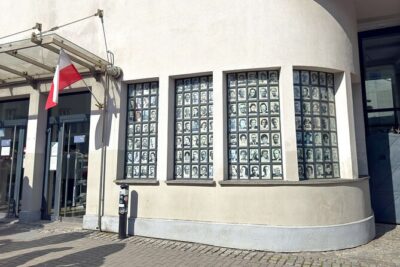
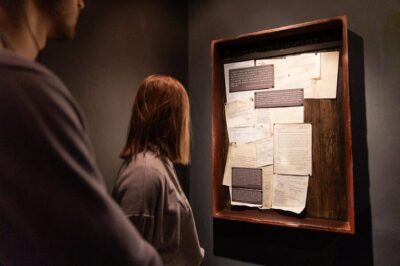
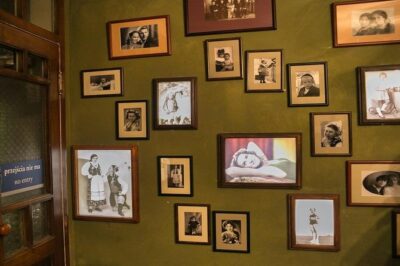
Schindler’s Factory is not just famous. It’s physically set up to explain why history can’t be reduced to a movie plot. Inside, you’ll follow the exhibition Kraków under Nazi Occupation 1939–1945, which looks at Kraków during the occupation through photographs, personal objects, and recreated street scenes.
One thing I really appreciate is how the guide frames Schindler as a person acting inside a wider system. The museum portion connects the factory to the reality of Nazi rule, and it makes room for the daily routines, fear, and uncertainty people faced. You’re not only learning why Schindler’s actions mattered; you’re learning why survival was the exception, and what ordinary life meant in that pressure.
The layout can be tight. Passageways are narrow, and the exhibition is designed to create a close, wartime-feeling flow. That’s good for focus, but if you get claustrophobic or have trouble moving through crowds, factor that in.
How the guide builds context before you hit the ghetto streets
This tour works best when you understand the order: you start inside, then you walk. The factory section gives you the wider picture of Kraków before, during, and across the occupation years, including how Jewish and non-Jewish residents endured the war side by side, under vastly unequal danger.
You also hear the story through the lives tied to Schindler’s choices, often associated with the term Schindlerjuden. That part matters because it keeps the narrative grounded in real people: the guide uses testimonies and individual stories to show what changed when Schindler used his position, influence, and resources to protect workers from deportation.
In the guided format, context is the secret sauce. Several guides have been praised for clear explanations and the ability to answer questions, which makes a difference when the history gets complicated. When your guide sets up how persecution unfolded across everyday life, the ghetto walk later feels less like a separate chapter and more like the same story from street level.
Józefińska 41: lifelines inside the enclosure
Once the indoor foundation is in place, you start your walking portion among remnants of the Kraków Ghetto. This is where you shift from the museum’s “look and learn” to a route that helps you visualize confinement in real space.
One of the most meaningful stops is Józefińska 41. The site is tied to what the ghetto needed to survive: an orphanage, welfare offices, and a hospital. You’re not just hearing about deportations and arrests. You’re learning how people tried to keep children alive, how social help worked under terror, and how medical care functioned when the entire system was designed to crush Jewish life.
A small caution: this part can be emotionally heavy. That’s the point. Just go in with the mindset that the tour is describing both suffering and the mechanisms of endurance. If you prefer your history tidy and distant, this won’t feel that way.
More of Krakow under the wartime occupation
- Krakow: Schindler’s Factory Ticket and Guided Tour Option★ 4.3 · 4,306 reviews
- Krakow: Schindler’s Factory Tour with Entrance Ticket★ 4.5 · 3,182 reviews
- Krakow: Schindler’s Factory Skip-the-Line Ticket★ 4.4 · 3,105 reviews
- Krakow: Schindler’s Factory Tour with Entrance Ticket★ 4.6 · 1,737 reviews
Ghetto Heroes Square and the Chair Memorial: round-ups made visible
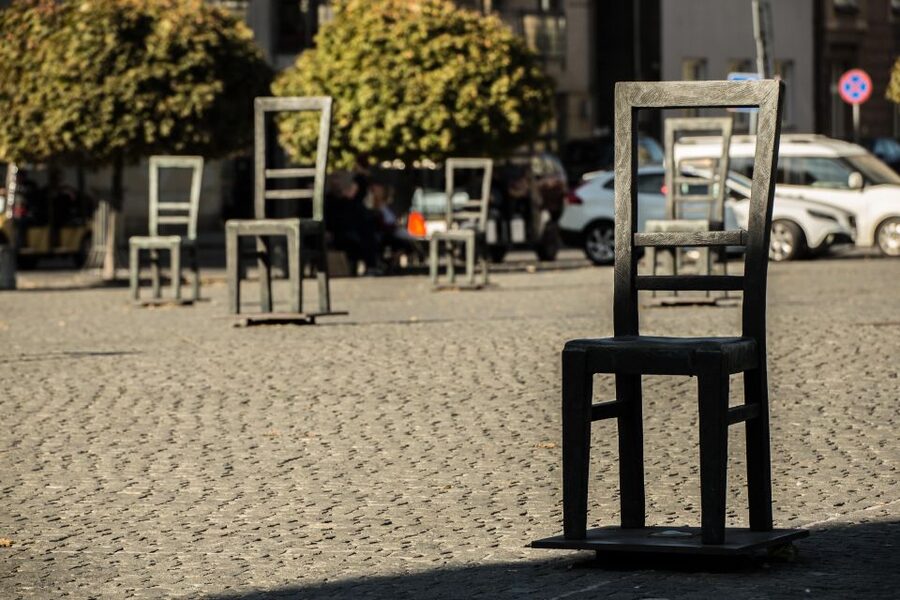
Next comes Ghetto Heroes Square, a place that turns into a lesson on how Nazi control became action. The square is marked by the Chair Memorial, and your guide connects the open public space to round-ups and deportations to concentration camps.
Why this stop hits is simple: you’re standing somewhere the story isn’t hidden. A memorial in an open area changes your perspective. You can’t pretend this was only happening “somewhere else,” in a distant camp or a faceless process. The guide helps you see how the ghetto’s enclosure still had public moments of terror.
If you come expecting a long sightseeing detour, you may be surprised by how quickly the tone changes. This is one of those spots where the guide’s narration does a lot of work, turning geography into memory.
Under the Eagle Pharmacy: help under risk (no entry inside)
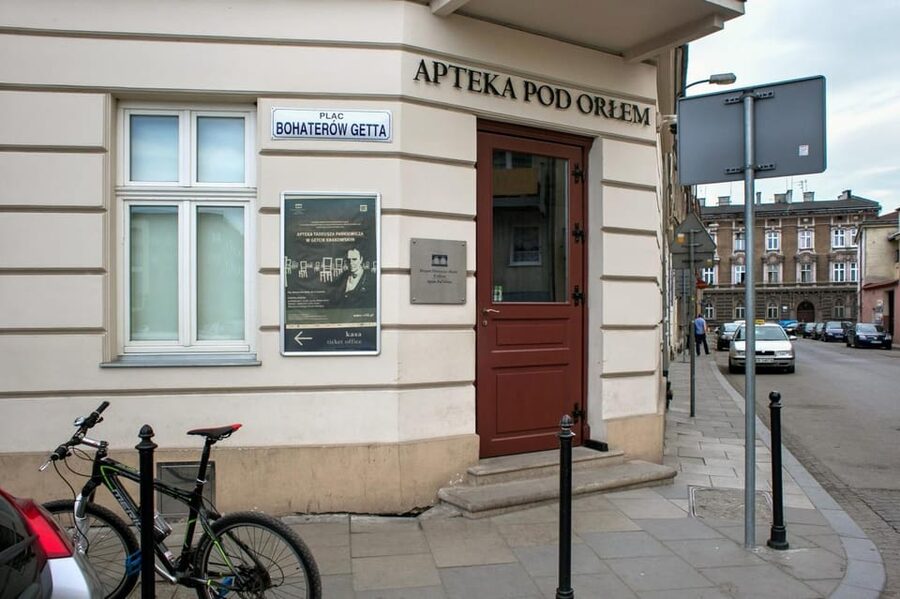
The Under the Eagle Pharmacy stop is brief but significant. You’ll learn about Tadeusz Pankiewicz and his staff, who risked everything to aid Jewish residents by providing medicine, shelter, and hope.
You do not enter the pharmacy. That’s an important detail. The learning here is about the stories and what help looked like under Nazi occupation, not about browsing preserved rooms. Still, the stop can be one of the most human segments of the tour because it shifts the focus from only what was taken to what some people chose to protect.
One practical consideration: some visitors have wished for more time at this stop. If this topic is the kind you want to linger with, you might mentally plan to ask your guide extra questions here if there’s time. In small-group tours, good guides often have room to expand.
Price and time: is $57 good value for this 3-hour tour?
At $57 per person for about 3 hours, you’re paying for three things that add up quickly in Kraków: a licensed guide, fast-track admission to the museum, and a guided ghetto walking route. That’s usually the sweet spot for visitors who want depth without losing an entire day to planning.
Fast-track entry matters because Schindler’s Factory is one of Kraków’s busiest museums. Buying a timed ticket is one thing; having a guide-led flow is another. You’ll get through the front door and start learning immediately, instead of waiting and then trying to catch up on context.
That said, there are tradeoffs. Some people felt the museum section can feel rushed because there’s a lot to see and the exhibition is very popular. Others noticed some repetition between the factory and ghetto portions, especially if you’re hearing a similar theme from two angles. If you’re the type who wants to spend 45 minutes in front of one photo, this format may leave you wanting more standalone time at the museum.
Group size (limited to 25) helps keep things workable. Still, it’s not silent and empty. If you’re sensitive to crowds and quick movement, consider choosing a less busy time of day.
What the best guides do (and how to choose your moment)
The tour’s quality often comes down to narration style and pacing. Names that have come up with strong praise include Bartholomew, Joanna, Magda, Phil, and Alicja. Across these feedback points, the consistent theme is clarity: guides who explain well, answer questions, and keep you oriented through dense material.
Here’s the practical part for you: arrive on time so your guide isn’t trying to regain the group schedule. The museum also has narrow passageways and an exhibition flow that doesn’t really forgive delays. Late arrivals aren’t accommodated once the group has entered, and tickets are not refundable, so a buffer of at least 10 minutes is worth it.
Language is another “how to choose” factor. Tours are offered in French, English, Spanish, German, and Italian, but only one language per group. If your language option is available, pick it carefully. The tour covers emotionally complex topics, so comprehension matters more than you might think.
Who this tour suits best in Kraków
You’ll love this tour if you want more than Schindler’s story as a headline. This experience gives you the setting: how Kraków functioned under Nazi occupation, how Jewish and non-Jewish residents endured the war, and how survival sometimes depended on tiny choices made under extreme constraint.
It also suits you if you like guided structure. The walking portion has clear stops tied to specific places like Józefińska 41 and Ghetto Heroes Square, and the guide’s job is to connect those dots back to what you learned inside the museum.
I’d think twice if you’re looking for an easy, light day. This is heavy material. Even with thoughtful presentation and humane storytelling, the subject matter includes persecution, extermination of the Jewish population, and deportations. Go when you have the mental space to receive it.
Tips to get more from the 3-hour route
Plan for a mix of indoor and outdoor time. Weather can influence comfort during the walking part, and groups have done this in winter conditions where being cold is a real issue, not a minor inconvenience.
Wear shoes that handle uneven or crowded sidewalks. The route is a walking tour through the Jewish wartime district, and you’ll want your feet to stay happy so you can focus on the story.
In the museum, be ready for narrow corridors and a guided pace. If you tend to read every label, you might still feel hurried, but you can use the guide as your “filter” and come back later on your own if you want longer time with specific exhibits.
Finally, remember that food and drinks are not included. If you want energy for the full arc of museum plus walk, eat before or plan a meal after.
Should you book this tour?
If your goal is to understand Kraków under Nazi occupation in a way that connects artifacts to place, this tour is a strong choice. The factory museum part gives you context, and the ghetto walk gives you location-based meaning that an independent visit can miss unless you’re very practiced at piecing it together.
Book it if you like a licensed guide, want fast-track entry, and feel comfortable with emotionally challenging history presented with care. Consider skipping (or pairing with extra standalone time) if you need a slow museum pace or dislike any feeling of being moved along.
For most first-time visitors who want the most value from a half-day window, this is one of the better ways to experience Schindler’s Factory and the wartime district together.
FAQ
How long is the Schindler’s Factory and Jewish Ghetto guided tour?
It lasts about 3 hours.
What’s included in the price?
The tour includes a professional, licensed guide, fast-track admission to Schindler’s Factory, and a walking tour of the Jewish wartime district.
Does the tour include food or drinks?
No. Food and drinks are not included.
Where do I meet my guide?
Meet your guide at the main entrance of the Schindler’s Factory Museum, on the right-hand side, where they hold an Schindler`s Factory Guided Tour sign.
Is the Under the Eagle Pharmacy stop inside the building?
No entry is included for the Under the Eagle Pharmacy. You stop there for stories, but you don’t go inside.
What languages are available?
Tours run in French, English, Spanish, German, and Italian, with one language per group.
More Tour Reviews in Krakow

Krakow in Wartime: More Reviews

More of Jewish Kazimierz

Just added: fresh Krakow reviews
Schindler's Factory & WWII Tours, compared.
 ★ 4.3Schindler’s Factory Ticket and Guided Tour OptionFrom $254,306 reviews
 ★ 4.5Schindler’s Factory Tour with Entrance TicketFrom $493,182 reviews
 ★ 4.4Schindler’s Factory Skip-the-Line TicketFrom $253,105 reviews
★ 4.6Schindler’s Factory Tour with Entrance TicketFrom $401,737 reviews
★ 4.4Schindler’s Factory Skip-the-Line TicketFrom $253,105 reviews
★ 4.6Schindler’s Factory Tour with Entrance TicketFrom $401,737 reviews
 ★ 4.5Schindler’s Factory in Krakow: Guided Tour & Skip the Line TicketFrom $351,714 reviews
 ★ 4.7Schindler’s Factory & Ghetto Guided TourFrom $571,694 reviews
 ★ 4.3Schindler’s Factory Ticket with Guided Tour OptionFrom $421,485 reviews
 ★ 4.0Krakow Schindler’s Factory Guided Tour with Admission TicketFrom $351,156 reviews
Browse the lists this tour appears in